Cart
0
A 7 a.m. flight, a Friday meeting, dinner reservations, and a Sunday return home all ask something different of your luggage. The weekender bag vs carry on decision is not simply about size. It is about how you want to move: quickly through the airport, confidently into a hotel lobby, and without a suitcase that feels out of step with the rest of your look.
Both styles can make short travel feel more polished. The right choice depends on your itinerary, what you pack, and whether your bag needs to perform beyond the airport. A refined weekender can transition from train platform to overnight stay with effortless sophistication. A structured carry-on offers the order and capacity that make a longer trip feel considered rather than cramped.
Weekender Bag vs Carry On: The Essential Difference
A weekender bag is usually a soft-sided duffel, tote, or holdall designed for one to three nights away. It prioritizes flexible packing, easy access, and a more relaxed silhouette. Think of it as the travel piece for a light packer who wants their luggage to feel like part of their outfit, not separate from it.
A carry-on is a broader category. It may be a wheeled case, garment bag, backpack, or structured travel bag that meets an airline's cabin-bag limits. Its defining feature is not its shape but its purpose: it is designed to travel in the cabin rather than the checked-baggage hold.
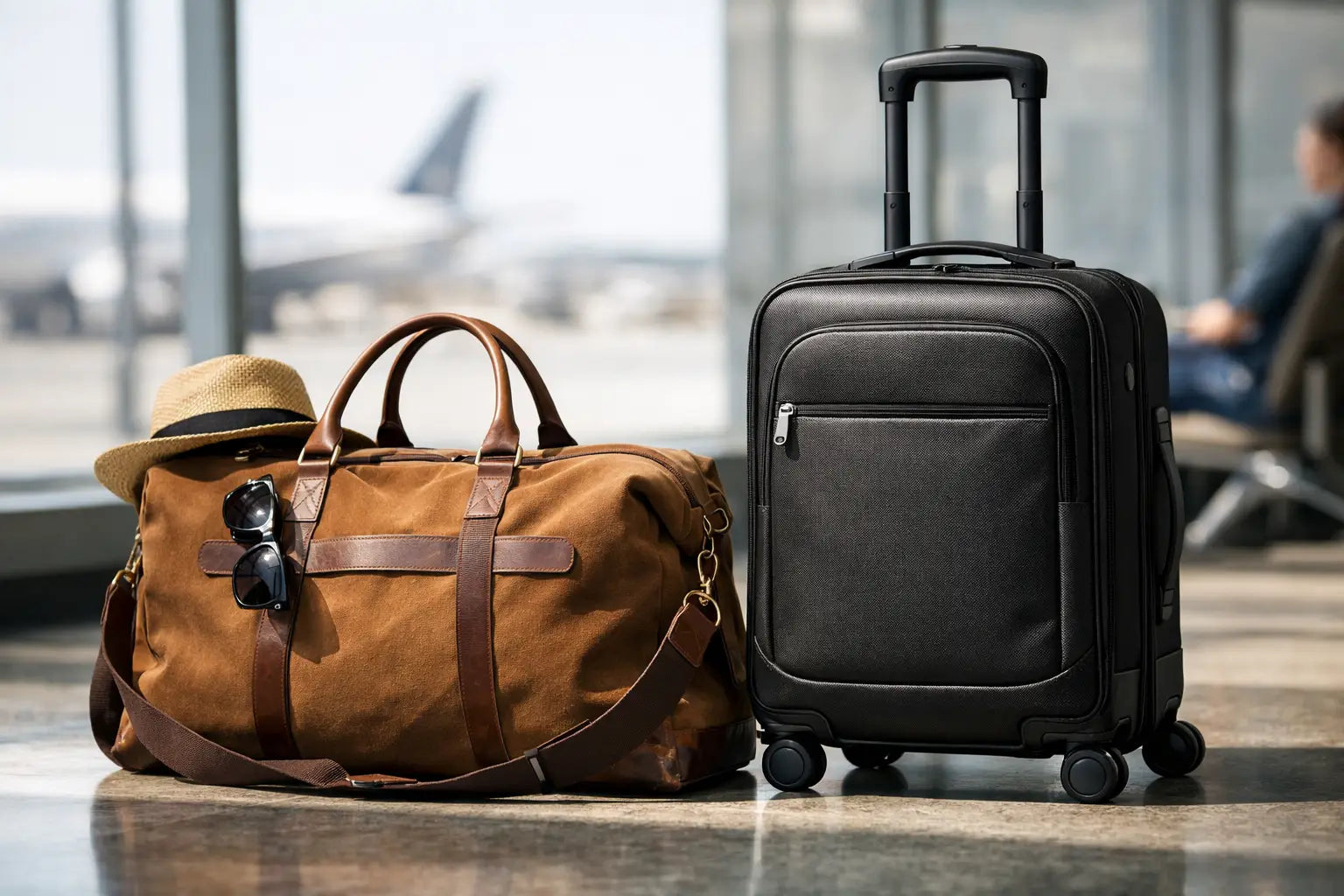
That distinction matters. Many weekenders can work as carry-ons, but not every weekender is sized or shaped appropriately for every airline. A compact overnight bag may slide under the seat, while an expanded duffel could be better suited to the overhead bin. Before you commit to a bag for a flight, check your carrier's current personal-item and cabin-bag measurements. Airline allowances vary, and a beautiful bag should never become an avoidable gate-side complication.
Choose a Weekender When Style Needs to Travel Further
A weekender is the natural choice for a two-night escape, a quick work trip, or a drive where you want to pack light without sacrificing polish. Its soft construction gives you freedom to fit an extra knit, a pair of shoes, or a last-minute outfit change. Unlike a rigid case, it can often adapt to the contents you actually bring.
This is also the bag for travel that blends into the rest of your life. You can carry a well-designed weekender into a client meeting, place it beside a café table, or take it from the office straight to the station. The effect is intentional and understated: one elevated piece that supports the whole itinerary.
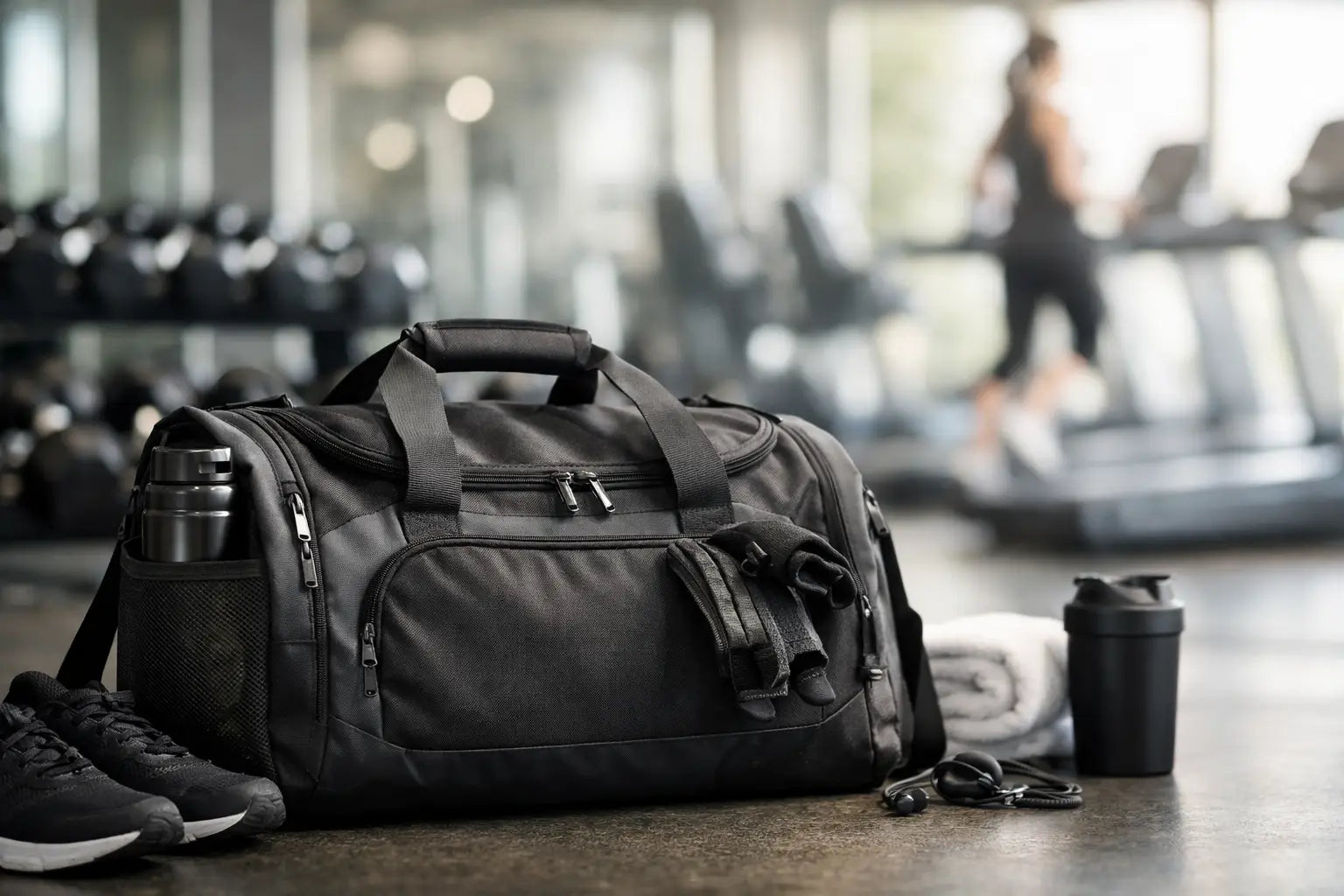
For business travelers, look for a silhouette with a secure laptop section or interior sleeve, plus enough separation to keep chargers away from clothes and toiletries. For a gym-to-getaway schedule, a shoe compartment or wipeable base earns its place quickly. For parents, wide openings and pockets that keep essentials visible can make a short family trip feel far less chaotic.
The trade-off is structure. Soft-sided weekenders rarely protect delicate items as well as a hard-shell suitcase, and an overpacked duffel can become heavy on one shoulder. If you tend to bring multiple pairs of shoes, full-size beauty products, or clothing options for every possible change in weather, the simplicity of a weekender may feel restrictive.
The ideal weekender packing mindset
A weekender rewards editing. Build around one elevated color palette, wear your bulkiest shoes in transit, and choose pieces that can move from daytime plans to dinner. A blazer, fine knit, tailored pants, and versatile sneakers or loafers can carry several moments of a short trip without taking over the bag.
Use smaller pouches to create order inside an open main compartment. One for beauty essentials, one for technology, and one for undergarments prevents the familiar search for a charger at the bottom of a full bag. The goal is not to pack less for its own sake. It is to pack with enough intention that every item earns its space.
Choose a Carry-On When Capacity and Control Matter Most
A carry-on suitcase is often the stronger choice for three to five days away, multi-city travel, or any trip with a fuller schedule. Its compartmentalized interior makes it easier to separate shoes, folded clothing, accessories, and clean items from worn ones. A wheeled design also takes pressure off your shoulders when terminals, platforms, and city streets are part of the plan.
A structured carry-on is particularly useful when you need to protect what you are bringing. Crisp workwear, occasion pieces, gifts, electronics, and skincare bottles all benefit from a more defined frame. If your itinerary includes a flight followed by a presentation or formal event, that additional organization can preserve both your clothing and your composure.
There is a visual consideration, too. A carry-on projects a more traditional travel profile. That can feel perfectly right for a long-haul business trip or a week with several hotel changes. Yet for a one-night stay, a rolling case can feel more than you need, especially if you will be navigating stairs, small restaurants, or a packed commuter train.
When a carry-on saves the trip
Choose the carry-on when your plans leave little room for improvisation. A winter weekend requires bulkier layers. A destination wedding needs shoes, accessories, and garment care. A work trip may require separate looks for meetings, dinners, and downtime. In those cases, a little extra capacity is not overpacking. It is practical preparation.
The best carry-on also gives you a reliable rhythm at security and in transit. Keep documents, headphones, medication, and a charging cable in an accessible outer pocket or personal item. Store the things you will not need until arrival inside. Small systems like this make travel feel less rushed, which is its own form of luxury.
The Smartest Option May Be Both
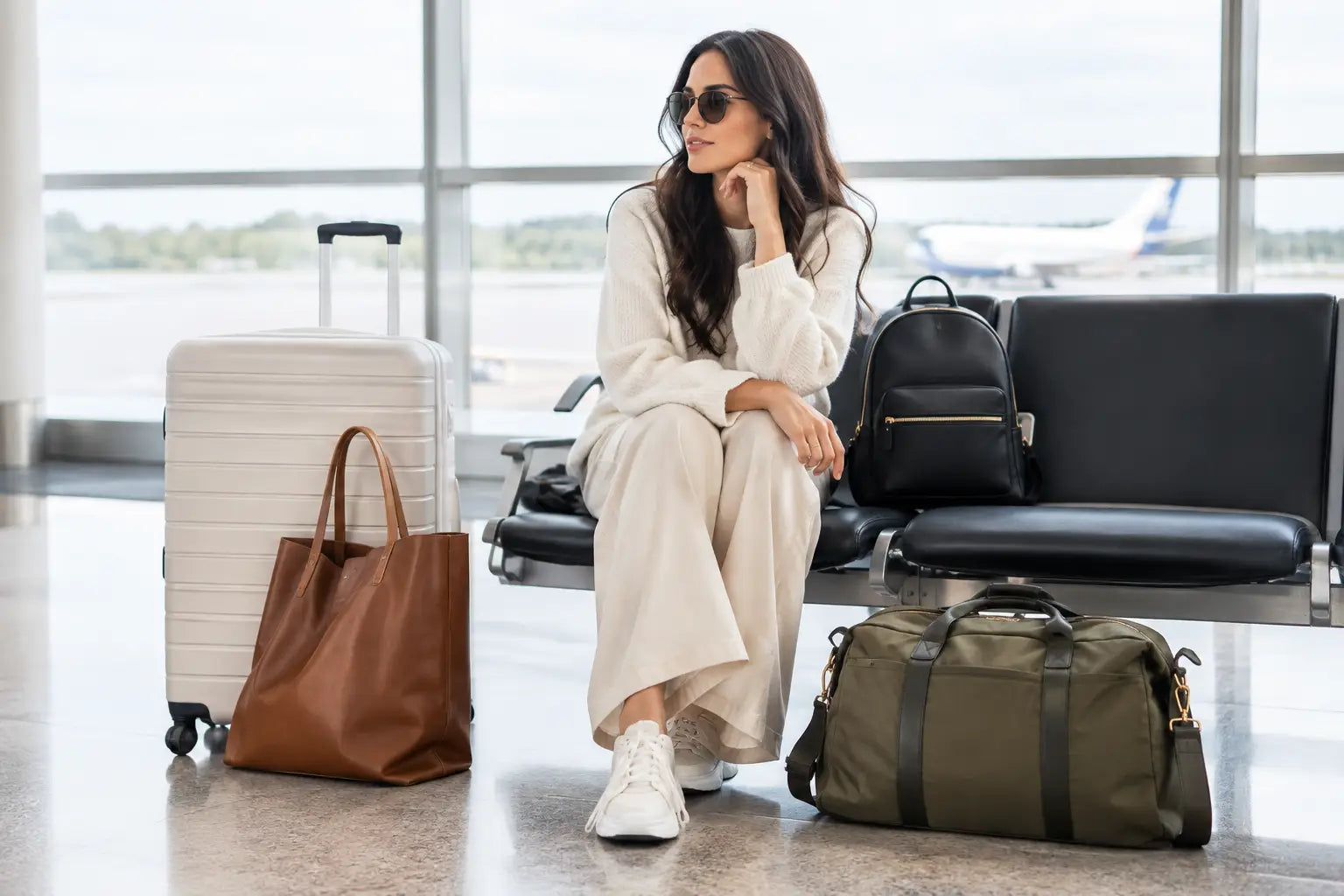
For frequent flyers, the strongest setup is often a carry-on paired with a smaller weekender, tote, or travel backpack. The carry-on handles the bulk of your wardrobe while the smaller bag keeps your in-flight and on-the-go essentials close. It also gives you a polished bag for daytime use after you arrive.
This pairing works especially well when your weekender qualifies as a personal item. Place your laptop, wallet, travel documents, beauty pouch, and an extra layer inside it, then use the wheeled case for clothing and shoes. You will board with everything essential within reach and avoid opening your main luggage mid-flight.
Still, do not buy two bags simply because the combination looks right. If you mostly take weekend road trips, one generously proportioned weekender may offer more value and more versatility. If you fly regularly for work or often travel for more than two nights, a carry-on with a complementary personal bag is likely the more refined investment.
What to Look for Before You Secure the Bag
The best travel bag is not defined by a single trend or a dramatic logo. It earns its place through proportion, comfort, and details that improve the way you travel. Consider the length of the handles, the weight of the bag when empty, the quality of the zipper, and whether the interior gives your essentials a clear home.
For a weekender, prioritize a wide opening, comfortable shoulder strap, protective feet, and thoughtfully placed pockets. A neutral finish in black, espresso, taupe, or deep navy offers timeless elegance and works across seasons. For a carry-on, focus on smooth wheels, a sturdy telescoping handle, secure closures, and dimensions that suit the airlines you use most.
Above all, choose a piece that matches your real travel habits. The bag that looks impeccable in a photograph but feels awkward after ten minutes of walking will not become a favorite. The one that carries your essentials with ease, complements your wardrobe, and lets you arrive composed will.
Your next trip does not need more luggage. It needs the right companion: a weekender for light, style-led movement; a carry-on for greater structure and range; or a considered pairing that makes every departure feel beautifully prepared.