Cart
0
A canvas bag earns its place in a well-curated wardrobe by doing it all: carrying work essentials, travel layers, gym pieces, and the small details that keep a busy day moving. Knowing how to clean canvas bags properly means preserving that effortless sophistication rather than treating a favorite tote or duffel like ordinary laundry.
Canvas is durable, but it is not indestructible. Strong detergent, excess water, and high heat can leave the fabric faded, misshapen, or stiff. The right approach is measured, gentle, and refreshingly simple.
Start With the Bag’s Details
Before cleaning, empty every pocket and shake the bag upside down over a trash can. Remove loose receipts, crumbs, dust, and anything tucked into interior compartments. Use a soft brush or the upholstery attachment on a vacuum to lift dry debris from seams, folds, and the base of the bag.
Then check the care label, if one is present. This matters most for structured totes, printed canvas, waxed canvas, and bags finished with leather handles, metal hardware, or suede trim. A plain cotton canvas market bag can often tolerate more moisture than a refined work tote with reinforced panels and contrast details.
If your bag has leather accents, protect them from prolonged contact with water and cleaner. If it is waxed canvas, do not use soap and water across the full surface. That finish relies on wax for weather resistance and needs specialized re-waxing rather than conventional washing.
What You Need to Clean a Canvas Bag
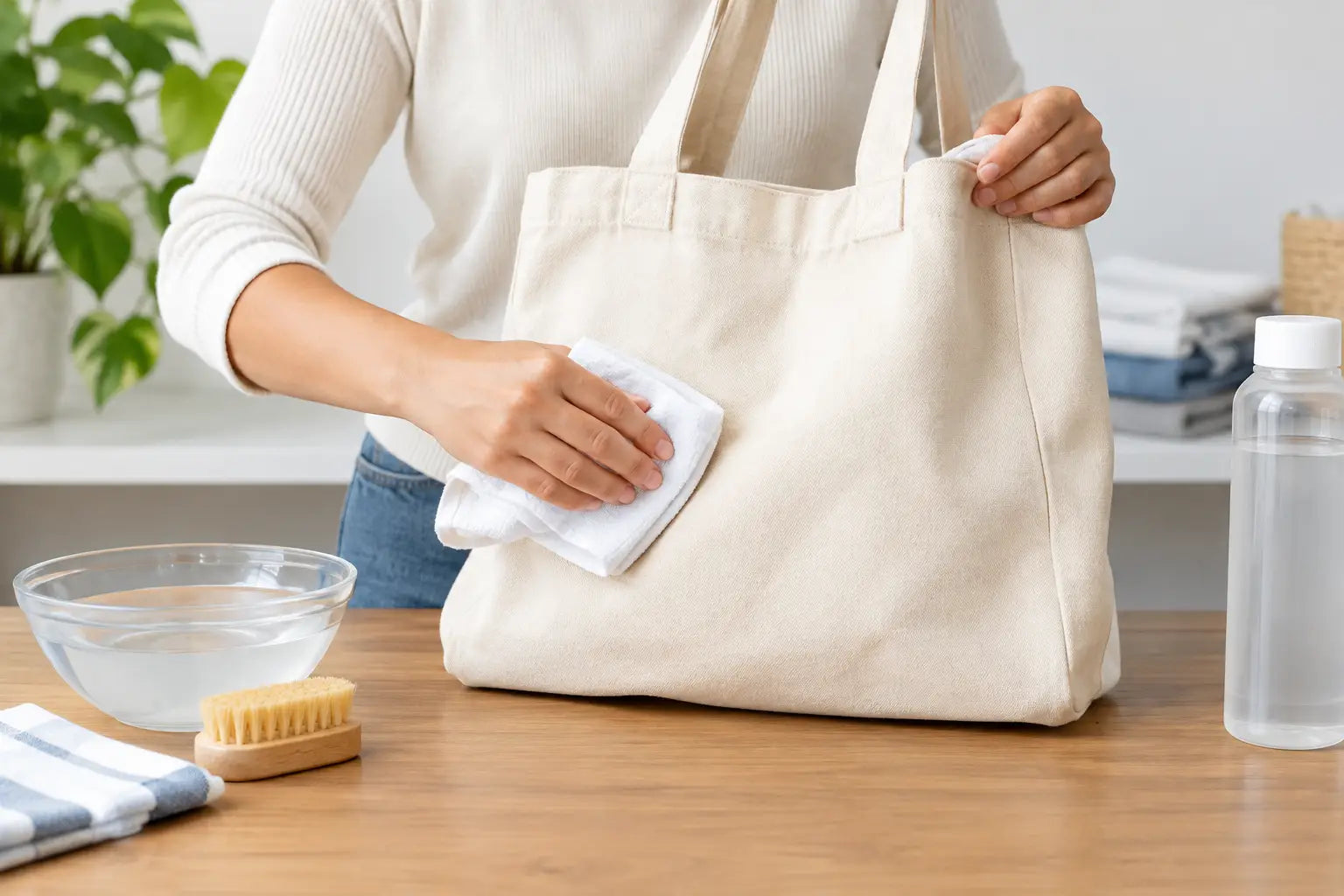
For most everyday canvas bags, a soft, controlled cleaning setup is all you need. Gather the following:
- A soft white cloth or microfiber cloth
- A soft-bristle brush, such as a clean toothbrush
- Mild liquid detergent or gentle dish soap
- A small bowl of cool water
- A clean, dry towel
How to Spot Clean Canvas Bags
Spot cleaning is the best starting point for nearly every canvas tote, backpack, crossbody, or duffel. It protects the bag’s shape while focusing only on the area that needs attention.
Mix a few drops of mild detergent into cool water. Dip a cloth into the mixture, then wring it out thoroughly. The cloth should be damp, not wet enough to soak through the fabric. Test the solution on a discreet area first, such as the underside of the bag or an interior corner, especially if the canvas is deeply colored or printed.
Blot the stain gently rather than rubbing it aggressively. Work from the outer edge toward the center so the mark does not spread. For textured areas, seams, or stubborn surface dirt, use a soft brush with very light pressure. Wipe the area again with a second cloth dampened with plain water to remove soap residue.
Pat the canvas dry with a towel. Leave the bag open in a cool, well-ventilated room until it is completely dry. Never use a hair dryer, radiator, or direct sunlight to speed up the process. Heat can shrink cotton canvas, fade color, and distort a bag that is designed to hold a polished silhouette.
For Ink, Makeup, and Food Stains
The faster you act, the better the result. Blot fresh food or drink spills immediately with a dry cloth. Do not scrub, as that can push the stain deeper into the weave.
For makeup marks, begin with a barely damp cloth and mild soap. Foundation and lipstick often respond well to repeated gentle blotting, while oily products may need a small amount of grease-cutting dish soap. Keep the cleaner confined to the stain and wipe it away carefully afterward.
Ink is less predictable. Dab, do not rub, and test any cleaning method in a hidden spot first. Rubbing alcohol can lift certain ink stains, but it may also affect dye or printed designs. If the bag is a premium structured piece or the mark is highly visible, professional cleaning is usually the more elegant choice.
Can You Wash a Canvas Bag in the Washing Machine?
Sometimes, but only when the care label explicitly permits it. A simple, unstructured canvas bag without leather, hardware, padded sections, or glued reinforcements may be machine washable. Even then, hand cleaning is gentler and gives you more control.
If machine washing is approved, turn the bag inside out and place it in a mesh laundry bag or pillowcase. Wash it alone on a cold, delicate cycle with a small amount of mild detergent. Skip fabric softener, bleach, and the dryer. Reshape the bag while damp, then air dry it fully.
Do not machine wash a structured work tote, travel bag, or backpack simply because the canvas looks tough. Internal boards, foam padding, coated linings, and hardware can shift or break down in the wash. A bag designed to bring order to your commute deserves a cleaning method that respects its construction.
Restore the Shape While It Dries
Shape is what separates a bag that feels elevated from one that looks tired. Once you have finished spot cleaning, gently smooth the canvas with your hands. Fill the interior with clean white towels, acid-free tissue paper, or a soft T-shirt to support its original form.
Avoid newspaper, which can transfer ink, and avoid overstuffing. You want enough support to prevent slouching, not so much pressure that the seams stretch. Keep the bag away from humid bathrooms and direct sun while it dries. Depending on the fabric weight and how much moisture was used, complete drying can take several hours or overnight.
If the canvas feels slightly stiff after cleaning, flex the fabric gently once it is dry. This can restore a more natural hand feel without forcing the structure.
Keep Everyday Marks From Building Up
A little maintenance is the quiet luxury behind a bag that always looks ready for the next plan. Wipe handles and high-contact areas every few weeks, especially on light canvas. These are the places most likely to collect hand lotion, makeup, city dust, and travel residue.
For bags that move between the office, airport, and weekend errands, store a folded cloth pouch inside for pens, cosmetics, snacks, and anything likely to leak. It takes little effort and protects the clean interior that makes a bag feel considered every time you reach inside.
When the bag is not in use, store it in a dust bag or breathable cotton pillowcase. Keep it upright or lightly filled to maintain the silhouette. Plastic storage bins can trap moisture, which creates the conditions for musty odors or mildew.
When Professional Cleaning Makes Sense
Some stains are better left to a specialist. Consider professional care for mold, deeply set oil stains, vintage canvas, luxury bags with leather trim, or bags with delicate embellishment. The same applies when color has transferred from dark denim or another bag. Trying several home remedies can turn a manageable issue into permanent fading.
A canvas bag is made for real life, not for being hidden away. Treat marks early, use less water than you think you need, and let the bag dry patiently. With thoughtful care, your everyday carryall can keep delivering function, confidence, and refined style wherever the day takes you.