Cart
0

A beautiful bag should not lose its presence after a crowded commute, a long-haul flight, or one busy week of being set down wherever life happens. Thoughtful bag care preserves the details that make a piece feel elevated: its clean lines, rich color, refined hardware, and confident shape. It is less about treating your bag like a museum piece and more about making sure it is ready to move with you, beautifully, every day.
The right routine depends on the material, the structure, and how you use the bag. A work tote that carries a laptop needs different attention than a compact crossbody reserved for dinner plans. Still, a few intentional habits can keep your collection looking polished for seasons to come.
Start Bag Care With Everyday Habits
The most effective care happens before a stain, scuff, or stretched handle has a chance to become a problem. Treat your bag as the finishing touch to your look, not the catchall for everything you might need that day.
Begin by being selective about what goes inside. Pens without caps, open cosmetics, snacks, loose keys, and water bottles with questionable lids can quickly compromise an otherwise immaculate interior. A small pouch for beauty essentials and another for cords or small technology creates order without adding fuss. It also means you can switch from your everyday tote to a travel bag or gym-ready duffel without bringing clutter along.
Avoid overfilling, especially with structured styles. A bag designed to hold essentials will look its best when it is not forced to carry a change of shoes, a laptop, a water bottle, and every receipt from the past month. Excess weight can pull at handles, distort corners, and make a refined silhouette appear tired. If your day genuinely requires more capacity, choose a spacious tote, backpack, or travel bag designed for the load.
It also helps to think about where your bag lands. Restaurant floors, gym locker rooms, public transit seats, and car footwells are not kind to premium finishes. Use a bag hook when it is practical, rest it on a clean chair, or keep it on your lap. Small choices like these protect the base and corners, which tend to show wear first.
Know Your Bag’s Material Before Cleaning
A quick wipe may be suitable for one finish and damaging for another. Before using any cleaner, check the bag's care label or any product guidance that came with it. When in doubt, test a tiny, hidden area first and use the least aggressive approach.
Leather and Faux Leather
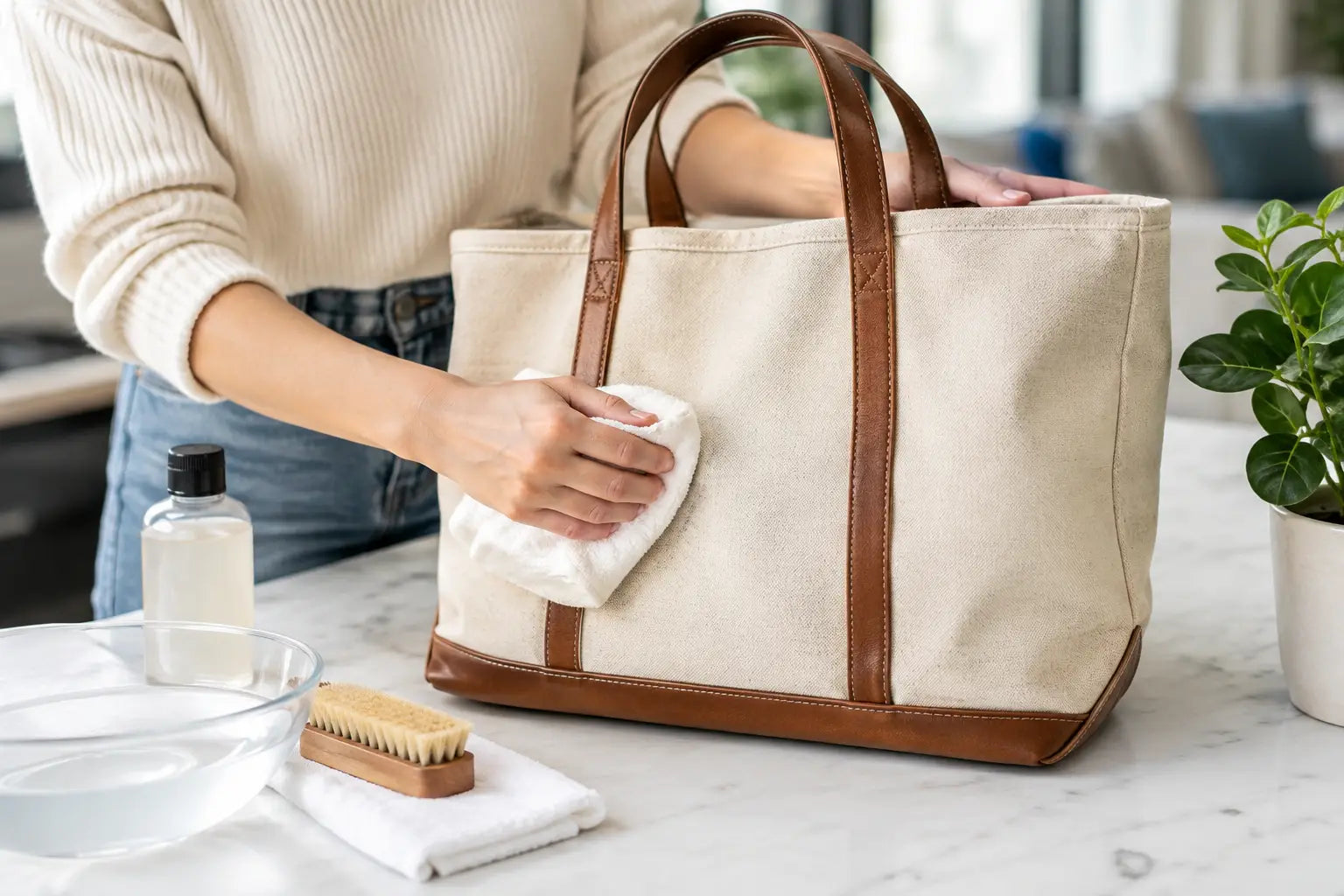
For smooth leather or quality faux leather, regular dust removal is often enough. Use a soft, dry microfiber cloth to gently lift surface dust and fingerprints. If a minor mark remains, lightly dampen the cloth with water, wring it out thoroughly, and wipe with a soft touch. Do not saturate the material.
Leather can benefit from an occasional conditioner made specifically for its finish, but more is not always better. Over-conditioning may leave a residue or alter the texture. Faux leather usually does not need conditioner and may react poorly to products formulated for natural leather. Keep both away from high heat, direct sun, and radiators, which can dry, fade, or warp the surface.
For oil, ink, color transfer, or a stubborn stain, resist the urge to scrub. Scrubbing spreads the mark and can remove the finish. Professional cleaning is often the more elegant choice for a bag you truly love.
Suede, Nubuck, and Textured Finishes
Suede and nubuck bring softness and depth to an outfit, but they need a lighter hand. Use a brush designed for these materials to restore the nap and remove dry surface dirt. Water can leave marks, so do not attempt a wet clean unless the care instructions specifically allow it.
Textured materials and woven details collect dust in their crevices. A soft brush or dry cloth works better than a wet wipe, which can push dirt deeper into the texture. These styles are ideal for considered wear, whether that means keeping them for dry days or reserving them for plans where they will not be competing with a packed commute.
Canvas, Nylon, and Performance Fabrics
Backpacks, travel bags, and fitness styles often feature durable fabric that is built for movement. That does not mean they are invincible. Empty the bag first, then shake out debris and use a soft brush or lint roller on the interior. Spot clean with a damp cloth and mild soap if the manufacturer permits it.
Machine washing can weaken coatings, fade color, and affect structured panels, so it should never be the default. A careful spot clean maintains a more polished result and protects the bag's original shape.
Protect Shape, Hardware, and Interior Details
A bag's silhouette is one of its strongest style assets. When a structured tote collapses or a crescent bag develops a permanent crease, even a clean exterior can look less refined. Storage is where this detail matters most.
Before putting a bag away, empty every pocket and gently remove crumbs, receipts, and loose items from the lining. Then fill the main compartment with clean tissue paper, a soft scarf, or an insert that supports the shape without stretching it. Avoid newspaper, which can transfer ink, and avoid packing a bag so tightly that seams are put under pressure.
Store bags upright whenever possible, with space between them. Hanging a heavy bag by its handles for long periods can distort the straps and create stress at the attachment points. For crossbody bags, tuck the strap inside loosely or lay it around the bag without sharp bends. A dust bag is ideal, but a breathable cotton pillowcase is a practical alternative. Plastic storage bags trap moisture and can leave finishes looking dull or sticky over time.
Hardware deserves attention too. Zippers, clasps, feet, and chain details are part of the bag's overall polish. Wipe metal gently with a dry, soft cloth after use, particularly if the bag has been exposed to rain, humidity, fragrance, or hand lotion. Never force a zipper that catches. Check whether fabric or lining is caught first, then ease it free rather than pulling harder.
Create a Routine That Fits Your Lifestyle
Bag care should feel effortless, not like another task competing for your attention. A five-minute reset at the end of the week is enough for most everyday bags. Empty it, shake out the lining, wipe down the exterior, and assess whether it needs to be rotated out for a day or two.
For bags used in higher-demand settings, adjust the routine. A work bag may need a weekly interior clean because it carries tech, paperwork, snacks, and cosmetics. A travel bag should be cleaned after each trip, especially around wheels, base panels, handles, and exterior pockets. A gym bag deserves immediate attention after use so moisture and odor do not settle into the lining.
Rotation is also a form of care. Wearing the same bag every day can make sense when it perfectly suits your routine, but alternating between two or three pieces reduces strain and gives each one time to air out. It also refreshes your wardrobe without requiring a completely new look.
When to Repair Instead of Replace
A loose stitch, worn edge paint, sticky zipper, or tired handle does not automatically mean a bag is finished. Often, it means it has been well loved and deserves skilled attention. Repair is especially worthwhile when the bag has a timeless profile, a versatile neutral color, or a place in your daily rhythm that no replacement has matched.
The decision depends on the material, the extent of the damage, and the cost of restoration. A professional can often renew leather, reinforce handles, replace hardware, or repair lining issues with far better results than a home fix. For a premium everyday piece, preserving what already works is a quietly stylish choice.
A well-cared-for bag becomes more personal with time. Keep it clean, carry only what it was designed to hold, and store it with intention. Then, whether you are heading to a meeting, catching a flight, or stepping out for the evening, your favorite piece will meet the moment with the same effortless sophistication it had on day one.