Cart
0
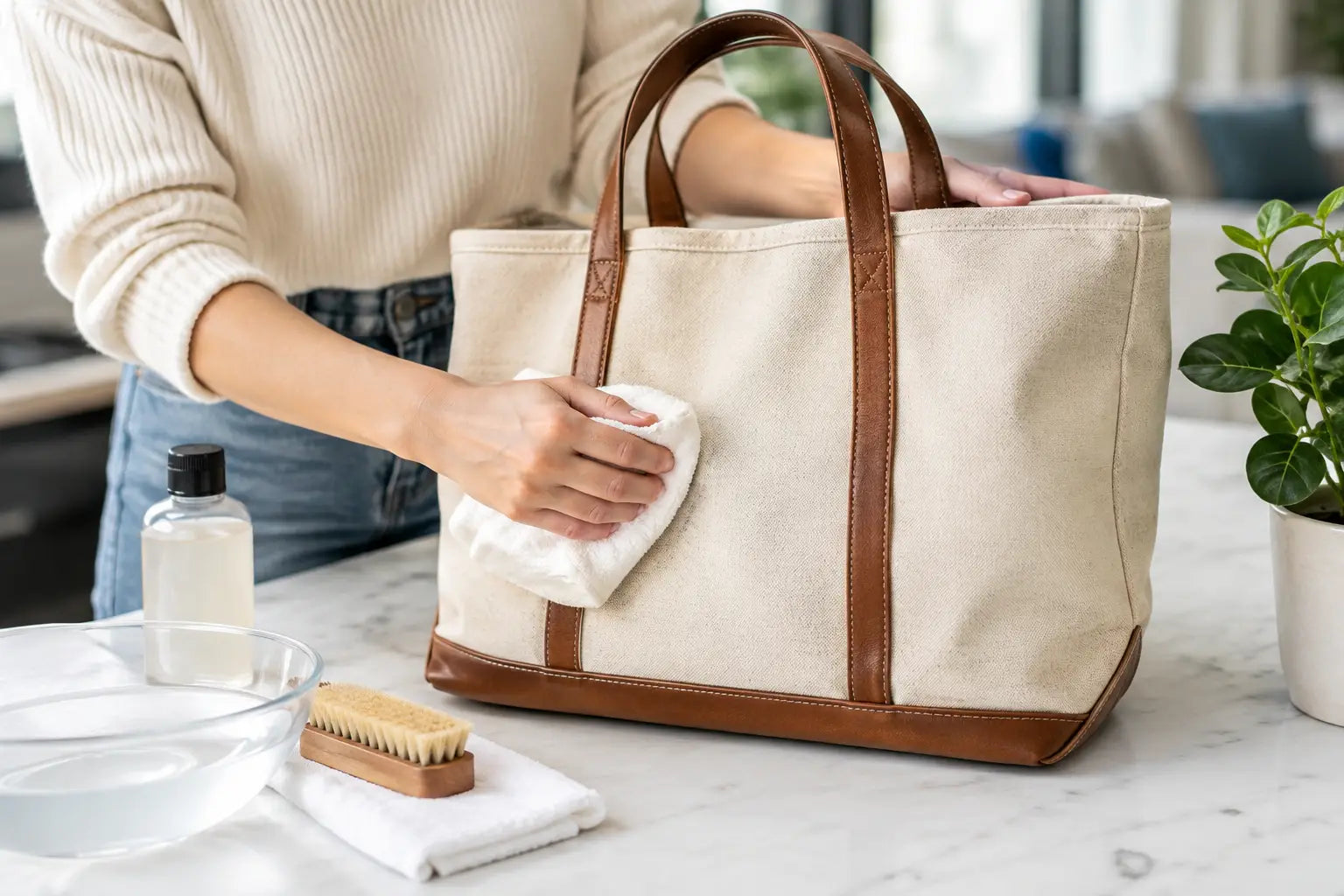
A canvas bag earns its place through real use: the commute, a quick coffee stop, a weekend away, or the stretch between meetings and the gym. Knowing how to clean canvas handbags properly keeps that easy sophistication intact. The goal is not to make a hardworking bag look brand-new overnight. It is to lift grime, treat marks with care, and preserve the shape that makes it feel polished in the first place.
Canvas is naturally relaxed, but it still deserves a considered approach. Excess water, harsh scrubbing, and high heat can leave a bag looking limp, faded, or uneven. A few careful steps will help your tote, crossbody, backpack, or travel bag stay fresh without sacrificing its character.
Start With the Bag's Construction
Before reaching for soap, look at the full bag rather than the stain alone. A simple unstructured canvas tote can usually handle a gentle surface clean. A bag with a rigid base, contrasting trim, metal hardware, printed artwork, interior lining, or structured handles calls for a lighter touch.
Empty every pocket first. Receipts, pens, crumbs, and loose cosmetics are often the source of hidden marks and odors. Shake the bag upside down over a trash can, then use a soft, dry brush or a lint roller to remove surface dust, hair, and debris from the interior and exterior.
Check any care label if one is present. Its instructions should take priority, especially when a bag combines canvas with premium synthetic leather, suede-like panels, coated details, or decorative finishes. When no label is available, test any cleaning solution on a discreet area, such as the underside of the base or inside edge of a pocket. Let it dry completely before cleaning the visible fabric.
How to Clean Canvas Handbags Gently
For routine refreshes, less is more. You need a clean white cloth, a soft-bristled brush, lukewarm water, mild liquid soap, and a dry towel. White cleaning cloths matter because colored towels can transfer dye onto light canvas.
Mix a small amount of mild soap into a bowl of lukewarm water. The water should look barely sudsy, not foamy. Dip the cloth into the mixture, wring it out thoroughly, and work in small sections. The cloth should be damp rather than wet enough to soak through the fabric.
Wipe with light, controlled strokes. For textured areas or seams, use a soft brush with minimal pressure, moving in a consistent direction. There is no prize for scrubbing harder. Aggressive friction can roughen the fibers and create a noticeably lighter patch, particularly on dark canvas.
Follow with a second cloth dampened only with clean water to remove soap residue. Then press a dry towel against the bag to absorb moisture. Avoid twisting or wringing the canvas, even if the bag feels saturated in one area. That can distort the weave and pull the bag out of shape.
Treat Stains by Type
A stain is not always a reason to clean the entire bag. Treating the affected area first is often safer and more effective.
For food or drink marks, blot immediately with a dry cloth. Do not rub the spill deeper into the fibers. Once the area is dry, use the mild soap solution and work from the outer edge of the stain inward. This helps prevent a larger water ring.
For makeup, try lifting the residue with a dry cloth first. Follow with a lightly dampened cloth and mild soap if needed. Oily marks are more complicated because water alone may spread them. Sprinkle a small amount of cornstarch or baking soda over the dry stain, leave it for several hours to absorb surface oil, then brush it away before gently spot-cleaning.
For ink, transfer, or a stubborn mystery mark, resist the temptation to use bleach, nail polish remover, or strong household sprays. Those products may remove color along with the stain. A professional cleaner experienced with handbags is the smarter choice when the bag is structured, sentimental, or a key part of your wardrobe rotation.
Keep the Shape While It Dries
Drying is where good intentions can undo careful cleaning. Never place a canvas handbag in a dryer, on a radiator, or in direct sun. High heat can shrink fabric, weaken adhesives, warp trim, and leave colors looking uneven.
Instead, reshape the bag while it is still slightly damp. Fill it lightly with clean white paper or a soft, color-safe towel to support the base and corners. Do not overstuff it. The idea is to restore its natural silhouette, not stretch it beyond its original form.
Leave it to air-dry in a cool, well-ventilated room. Open pockets and unzip compartments so moisture does not linger inside. Depending on the bag's size and how much water was used, full drying can take a day or longer. Be patient before putting belongings back inside. A bag that feels dry on the surface may still hold moisture in its lining or seams.
What to Avoid When Cleaning Canvas
Canvas can look casual, but careless cleaning shows quickly. Machine washing is generally a poor bet for handbags because the spinning action can bend hardware, wrinkle lining, and collapse the bag's structure. Full submersion is also risky for bags with reinforced bases, glued elements, or mixed materials.
Avoid bleach, harsh stain removers, abrasive brushes, and heavily fragranced detergents. They can cause discoloration, leave residue, or make the fabric feel stiff. Skip leather conditioners unless the product is specifically intended for the bag's trim. Canvas does not benefit from the same treatment as leather.
It also helps to clean the whole panel lightly after spot-treating a noticeable stain. If you clean only one small circle with too much water, the area can dry differently from the rest of the bag. A gentle blend around the treated section creates a more even finish.
Build a Simple Care Routine
The best way to protect a canvas bag is to prevent heavy buildup. A quick weekly shakeout and occasional wipe-down take minutes and make deep cleaning less necessary. Keep uncapped pens, open cosmetics, and loose snacks in a pouch, especially inside light-colored tote bags.
For workdays and travel, give your bag a designated resting place instead of setting it directly on the floor. When it is not in use, store it upright in a dry area away from prolonged sunlight. Lightly stuffing a structured canvas piece helps it hold its form, while a dust bag or clean cotton pillowcase offers protection without trapping moisture.
Consider the color before choosing your cleaning method. Natural and light canvas shows everyday marks sooner, so regular gentle maintenance is useful. Dark canvas disguises dirt better but can show fading if over-cleaned. In both cases, selective care is more refined than frequent, aggressive washing.
Let a Well-Cared-For Bag Do Its Job
A clean canvas handbag has a particular kind of polish. It still feels relaxed enough for a weekend market or airport lounge, yet sharp enough to carry into a client meeting or dinner reservation. The appeal lies in that balance: practical, composed, and ready to move with you.
Treat cleaning as part of the bag's wardrobe life, not a rescue mission after months of wear. With a soft hand, minimal moisture, and proper drying, your favorite canvas piece can keep bringing effortless sophistication to every routine it carries.