Cart
0
A beautiful bag can still look tired when its hardware loses its finish. A dulled clasp, scratched buckle, or tarnished zipper pull draws the eye, especially on a structured work tote, polished briefcase, or refined crossbody. Learning how to protect bag hardware is one of the simplest ways to keep an everyday essential looking considered long after the first outing.
Hardware is more than a functional detail. The zipper, feet, rings, closures, chains, and logo plates create contrast and structure, giving a bag its finished presence. With a few deliberate habits, you can reduce daily wear without treating your favorite bag like it belongs behind glass.
Why Bag Hardware Shows Wear So Quickly
Metal hardware meets the busiest parts of your routine. It brushes against desks, car interiors, countertops, keys, jewelry, and other bags. It is also exposed to hand lotion, fragrance, moisture, sunscreen, and the natural oils on your hands. Over time, that contact can leave marks, cloud a shiny finish, or affect the color of plated pieces.
Different finishes age differently. Brushed or matte hardware can hide small marks well, while high-shine gold-tone, silver-tone, or dark hardware tends to show fingerprints and fine scratches sooner. A bag designed for daily commuting will naturally gain more character than one reserved for evenings or special occasions. The goal is not perfection. It is keeping the wear graceful, clean, and in line with the bag's timeless elegance.
How to Protect Bag Hardware Every Day
The most effective care happens before damage has a chance to build. Start by giving your bag a clear space whenever you set it down. Instead of placing it beside loose keys, coins, pens, or a metal water bottle, keep those items in interior pockets or small pouches. This prevents the quick, accidental scratches that are difficult to polish away later.
Be mindful when wearing bracelets, watches, and rings with a bag that has prominent chains, turn locks, or decorative plates. There is no need to avoid jewelry entirely. Simply lift the strap into place rather than letting it slide repeatedly across a watch or bracelet. That small adjustment protects both accessories while preserving a cleaner finish.
Zippers deserve the same attention. Open and close them by the pull, not by tugging on the surrounding fabric or body of the bag. If a zipper catches, stop rather than forcing it. An overfilled bag can put unnecessary pressure on the zipper teeth, pull tab, magnetic closure, and strap rings. A little room inside the bag helps every component operate as intended.
For bags with protective feet, use them well. Set the bag upright on clean, dry surfaces whenever possible, rather than laying it flat against rough flooring or concrete. Those small metal feet are designed to take some contact, but they are not immune to scuffs. A chair, luggage stand, desk edge, or clean shelf is always the more polished choice.
Clean Hardware Gently, Not Aggressively
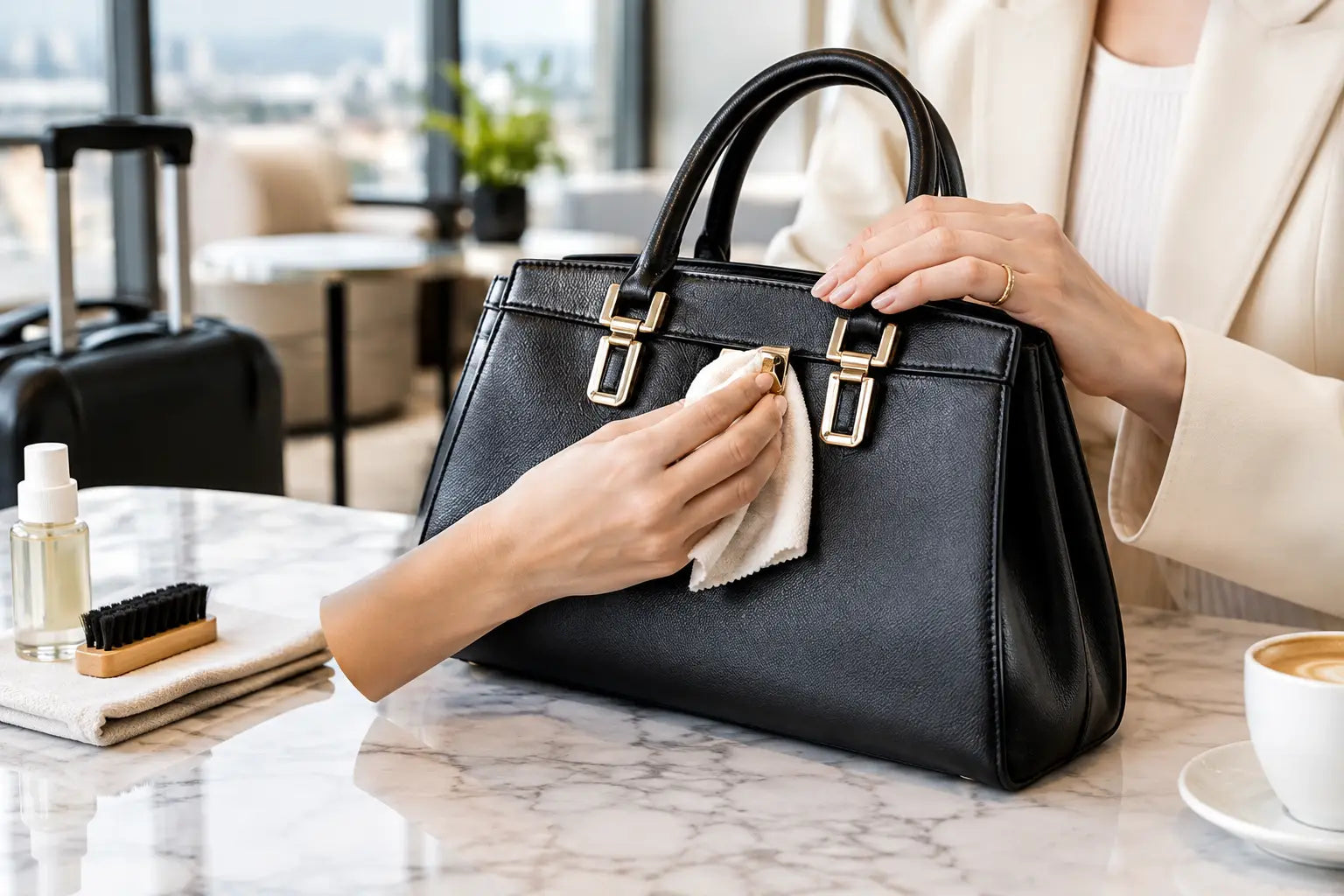
A quick wipe after regular use is often enough to maintain a refined look. Use a clean, dry microfiber cloth to remove fingerprints, dust, and surface oils from hardware. Work with light pressure and avoid rubbing the same spot too firmly, especially if the finish is plated or has a coated color.
If the hardware needs more than a dry wipe, lightly dampen a soft cloth with water, then wring it out thoroughly. The cloth should feel barely moist, never wet. Wipe the metal carefully and dry it immediately with a second soft cloth. Keep moisture away from seams, stitching, and the material around the hardware.
Avoid household metal polish, abrasive pads, disinfecting wipes, nail polish remover, and harsh cleaning sprays. These products may seem like a shortcut, but they can strip protective coatings, leave residue, or alter the finish. The same caution applies to toothpaste and other popular home remedies. What works on solid household metal may be far too aggressive for fashion hardware.
For stubborn residue around a clasp or zipper pull, use a dry, soft-bristled brush to lift dust from crevices. A clean makeup brush or detailing brush works well. This is particularly useful on travel bags and backpacks, where hardware can collect lint and fine debris during busy days on the move.
Keep Fragrance and Lotion Away From Closures
Apply hand cream, sunscreen, and fragrance before picking up your bag, then allow each product to settle. This is especially helpful with top handles, turn locks, and chain straps. Cosmetics and skin-care products can leave a film that dulls hardware over time, even when the bag itself appears clean.
If you are heading to the gym, beach, or airport, take an extra moment to wipe down hardware after use. Salt, sweat, humidity, and spilled liquids deserve prompt attention. A soft cloth in your bag-care kit takes almost no space and can make a meaningful difference.
Store Bags So the Hardware Cannot Scratch
Storage is where many avoidable marks happen. When bags are stacked together, exposed buckles and zipper pulls can rub against neighboring surfaces. Store each bag upright when possible, with enough room that straps, chains, and metal details are not pressing into another bag.
Before putting a bag away, fasten the closure and tuck the strap inside or around the body without creating sharp bends. For chain straps, wrap the chain loosely in soft tissue or place a layer of tissue between it and the bag. This prevents the chain from leaving pressure marks or impressions during long-term storage.
A dust bag offers an added layer of protection, but it should be clean and breathable. Avoid sealing bags in plastic for extended periods, particularly in warm or humid spaces. Trapped moisture can affect both the bag and its hardware. Choose a cool, dry closet or shelf away from direct sunlight and frequent temperature changes.
Shape matters, too. Lightly fill a tote, satchel, or structured travel bag with clean tissue paper or a soft bag insert before storage. A bag that holds its shape places less strain on clasps, zipper tracks, and metal strap attachments. Do not overstuff it, since excessive pressure can distort closures and create tension around hardware.
Protect Hardware While Traveling
Travel asks more of a bag, from overhead compartments to hotel counters and crowded terminals. Before packing, secure every zipper and closure, then place the bag inside a soft dust bag or clean fabric cover if space allows. Keep it away from shoes, chargers, and toiletries with hard edges or leaking potential.
For a briefcase, duffel, or backpack that will ride under a seat, place it with the hardware facing upward or toward a soft garment. This limits contact with rough flooring and prevents buckles from catching on other items. If your bag has a removable shoulder strap, consider storing it inside the bag during transit when practical.
There is a balance to strike. A bag made for real life should travel with you, carry what you need, and fit your schedule. Protective habits should feel effortless, not precious. A few thoughtful choices at packing time are usually enough to preserve the polished finish you want.
When Hardware Needs Professional Attention
Fine scratches, slight dullness, and small signs of use are normal. However, peeling finish, loose rivets, a broken zipper pull, a clasp that no longer closes securely, or greenish residue around hardware calls for more careful assessment. Do not try to glue, bend, or aggressively polish these issues at home.
A qualified bag repair specialist can often replace a zipper pull, reinforce loose hardware, or evaluate whether a finish can be improved. Acting early is usually the smarter choice. A slightly loose ring can become a damaged strap attachment if it continues to carry weight.
Your bag should look ready for the meeting, the flight, the weekend plan, and every stop in between. Treat the hardware with the same care you give the rest of your wardrobe, and it will continue to add that crisp, confident finishing touch.