Cart
0
A faux leather backpack does more than carry your daily essentials. It finishes a commute-ready outfit, keeps travel days organized, and brings a polished edge to gym runs and weekend plans. Knowing how to clean faux leather backpack material correctly helps preserve that refined look without leaving behind a dull, sticky, or cracked finish.
The good news is that faux leather is generally easier to care for than genuine leather. The caution is that it does not respond well to aggressive scrubbing, soaking, heat, or heavy oils. A light hand and the right routine will keep your backpack looking considered, clean, and ready for wherever the day moves next.
Know What Your Backpack Is Made Of First
Most faux leather backpacks are made from polyurethane, often called PU, or polyvinyl chloride, known as PVC. Both are designed to mimic the smooth look of leather, but they have a synthetic top layer that can peel, discolor, or stiffen when treated with the wrong products.
Before you begin, check the care label inside the bag if one is available. It may advise against machine washing, dry cleaning, bleach, or certain cleaners. If the label is missing, treat the backpack as a delicate fashion accessory: clean only the surface, keep moisture minimal, and test any product on a hidden corner first.
This matters especially for bags with a matte finish, light colors, contrast stitching, metallic hardware, quilted panels, or printed details. A cleaner that seems harmless on black faux leather can alter a cream, blush, or textured finish.
What You Need for a Polished Clean
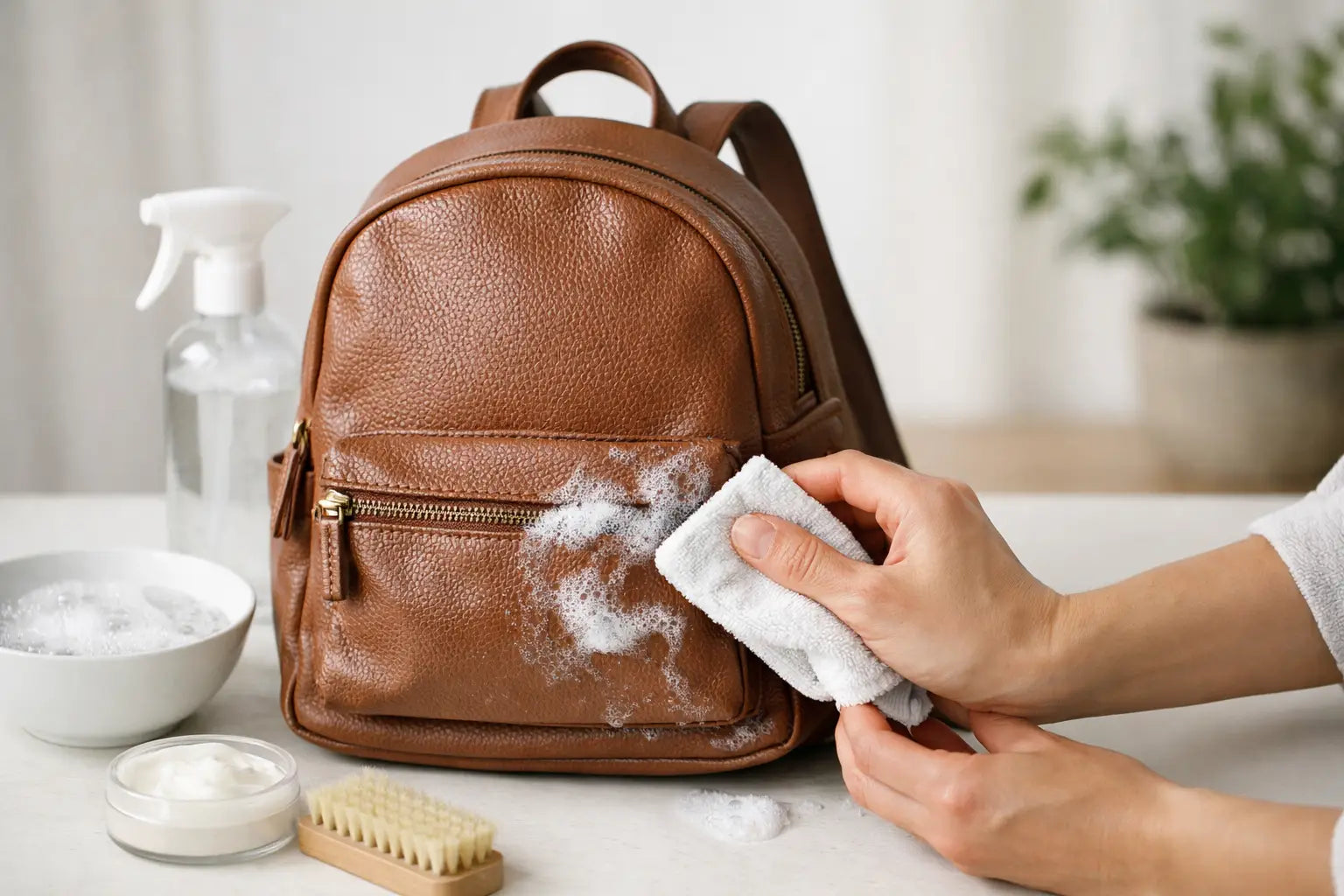
For routine care, you only need a soft microfiber cloth, lukewarm water, a small bowl, mild liquid soap, and a dry towel. Choose a gentle soap without bleach, abrasive particles, or strong fragrance. Dish soap can work in a pinch, but use only a drop or two in water.
For a more targeted refresh, keep cotton swabs nearby for seams and hardware. A soft-bristled toothbrush can help lift dust from textured areas, though it should never be used with force. Avoid paper towels whenever possible. Their rough fibers can leave faint scratches or lint on a smooth finish.
Do not reach for baby wipes, disinfecting wipes, rubbing alcohol, acetone, nail polish remover, furniture polish, or traditional leather conditioner. They may cut through surface grime quickly, but they can also strip color, leave residue, or weaken the faux leather coating over time.
How to Clean a Faux Leather Backpack Step by Step
Start by emptying every pocket. Shake the backpack upside down over a trash can, then use a dry cloth or a handheld vacuum on low power to remove crumbs, dust, and debris from the lining. Open each zipper fully so dirt does not stay trapped in the folds.
Next, wipe the exterior with a dry microfiber cloth. This simple first pass removes surface dust that could become abrasive once moisture is introduced. Pay attention to the base, straps, zipper tracks, and the back panel, where a backpack picks up the most daily contact.
Mix a few drops of mild soap into a bowl of lukewarm water. Dip one corner of a microfiber cloth into the solution, then wring it out thoroughly. The cloth should feel barely damp, never wet enough to drip.
Wipe the bag in small, gentle motions, moving from cleaner areas to dirtier ones. Work one panel at a time rather than saturating the entire backpack. For textured faux leather, use a soft toothbrush with a minimal amount of the soap solution, brushing lightly along the grain before wiping the area with a clean damp cloth.
Once the exterior is clean, use another cloth dampened with plain water to remove any soap residue. Finish by buffing the surface with a dry microfiber towel. Leave the backpack unzipped in a well-ventilated room until it is completely dry.
Never use a hair dryer, radiator, direct sun, or a clothes dryer to speed up the process. High heat can cause faux leather to warp, separate, or develop a brittle texture. Air drying takes longer, but it protects the sleek finish that gives the bag its elevated appeal.
Cleaning the Lining, Straps, and Hardware
A backpack can look immaculate on the outside while its lining tells a different story. For a fabric lining, wipe the interior gently with a cloth dampened in mild soapy water. Keep the moisture controlled, especially around seams and pocket edges. If a pen has leaked or makeup has spilled, treat the mark carefully rather than soaking the entire compartment.
Straps deserve regular attention because they collect body oils, sunscreen, and everyday grime. Clean them with the same lightly damp cloth, taking care around stitched joins. For metal zippers, buckles, and logo plates, use a dry microfiber cloth or a cotton swab. Moisture left around hardware can cause discoloration or interfere with smooth zipper movement.
How to Treat Common Stains Without Damaging the Finish
The best response to a stain is quick, calm action. Blot spills immediately with a clean dry cloth. Do not rub, since rubbing can push pigment or oil deeper into the textured surface.
For a water-based mark, such as a coffee splash or food residue, use the mild soap solution described above. Wipe gently, then remove soap with a separate damp cloth and dry the area. If the stain remains, repeat once after the bag has dried. Several light treatments are safer than one aggressive attempt.
For ink, makeup, or color transfer from denim, proceed with extra restraint. Start with a clean damp cloth and a tiny amount of mild soap. If that does not lift the mark, use a faux-leather-specific cleaner only after testing it on an inconspicuous area. Deep ink and dark dye transfer may not disappear fully, particularly on pale bags, and over-cleaning can create a larger, more visible patch than the original stain.
Oil-based stains are more complicated. Blot away excess product, then let the area rest before attempting a gentle clean. Do not apply powders, oils, or harsh degreasers unless the bag's care instructions specifically allow them. On faux leather, the finish often benefits more from patience than from a dramatic stain-removal method.
Keep Your Backpack Looking New Between Cleans
A full clean is not needed every week. For a backpack in regular rotation, a quick dry wipe every few days and a gentle clean once a month is usually enough. If you carry it to the gym, use it on flights, or place it on public transit floors, clean it more often as needed.
Storage is part of the care routine. Empty the bag before storing it, reshape it with clean tissue paper or a soft cloth, and keep it in a cool, dry place. Avoid hanging a heavily filled backpack by its straps for long periods, which can distort the silhouette. Avoid sealing it in plastic, too, since trapped humidity can encourage odors and affect the finish.
A dust bag is ideal, but a breathable cotton pillowcase also works well. Keep dark denim, damp clothing, and cosmetics in separate pouches inside the backpack. These small habits protect the interior and help prevent the color transfer that can take away from a clean, timeless design.
A well-kept faux leather backpack should feel as effortless as the outfit it completes. Give it a few quiet minutes of care, and it will stay ready for meetings, terminals, studio sessions, and every polished plan in between.